Quietest Bedroom Fan: What to Buy for Better Sleep
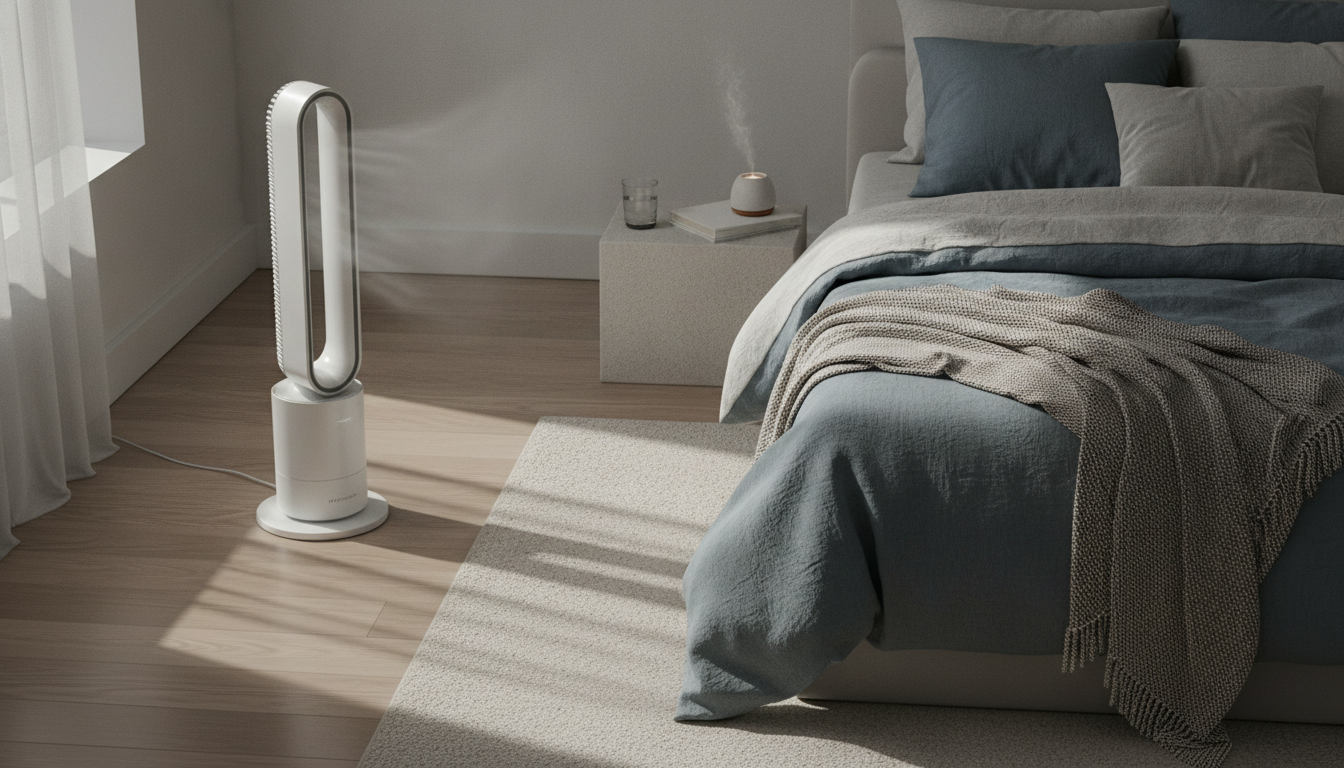
What’s the quietest fan for a bedroom?
The quietest fan for a bedroom is usually a small, well-balanced fan designed for low-noise airflow—often a modern bladeless desk fan or a premium tower fan. For most sleepers, the best choice isn’t the fan with the highest top speed; it’s the one that stays steady and smooth at low and medium settings, without rattling, clicking, or a pulsing “chop” of air.
Bladeless designs tend to feel calmer in a bedroom because they move air through a continuous airflow channel instead of exposed blades. That can reduce the turbulent “whoosh” many people notice when a fan is pointed at the bed. If you’re placing the fan on a nightstand, a compact model with touch controls is also convenient—no loud button presses or fiddly dials in the dark.
How to pick a truly quiet bedroom fan
Look for a low-speed mode that still circulates air. The quietest setting should be usable, not just a weak breeze. A fan that can maintain comfort at a gentle speed typically sounds less distracting all night.
Choose a stable build. Bedroom noise often comes from vibration: a wobbly base, a loose grille, or a fan that “walks” on a hard surface. A heavier base and solid construction help keep the sound consistent.
Mind the placement. Even a quiet fan can sound louder when it’s aimed directly at your ears. Angle it to circulate air across the room rather than straight at the pillow, and place it on a stable surface (a coaster or mat can reduce vibration on slick furniture).
A quiet option worth considering
If you’re interested in a compact, bedroom-friendly choice, a quiet bladeless desk fan with multiple speeds and simple touch control can be an excellent fit. For a deeper breakdown of what to look for and how these fans perform, visit this guide to a quiet bladeless desk fan with 3 speeds and touch control.
FAQ
Is a tower fan or a desk fan quieter at night?
It depends on the model, but many desk fans can be quieter at low speeds because they move less air overall. Tower fans often circulate a room better, yet some create more audible airflow and motor noise.










Leave a comment